Curington Contracting has been building industrial facilities since 1972 and entered the landfill gas-to-energy (LFGTE) sector in 2007. Since then, we’ve constructed LFGTE power plants, flare stations, gas compression systems, and renewable natural gas (RNG) facilities across the United States — from our home base in Ocala, Florida to projects in California, Virginia, Pennsylvania, Mississippi, and North Carolina.
Our experience spans projects ranging from 850-kilowatt containerized genset installations to full-scale 8-megawatt power plants with five engine configurations. Every facility we build follows our proven design-build process, with Curington managing planning, engineering coordination, and construction under one roof.
Below is a closer look at how we build these facilities and the projects that have established Curington as a trusted LFGTE contractor nationwide.
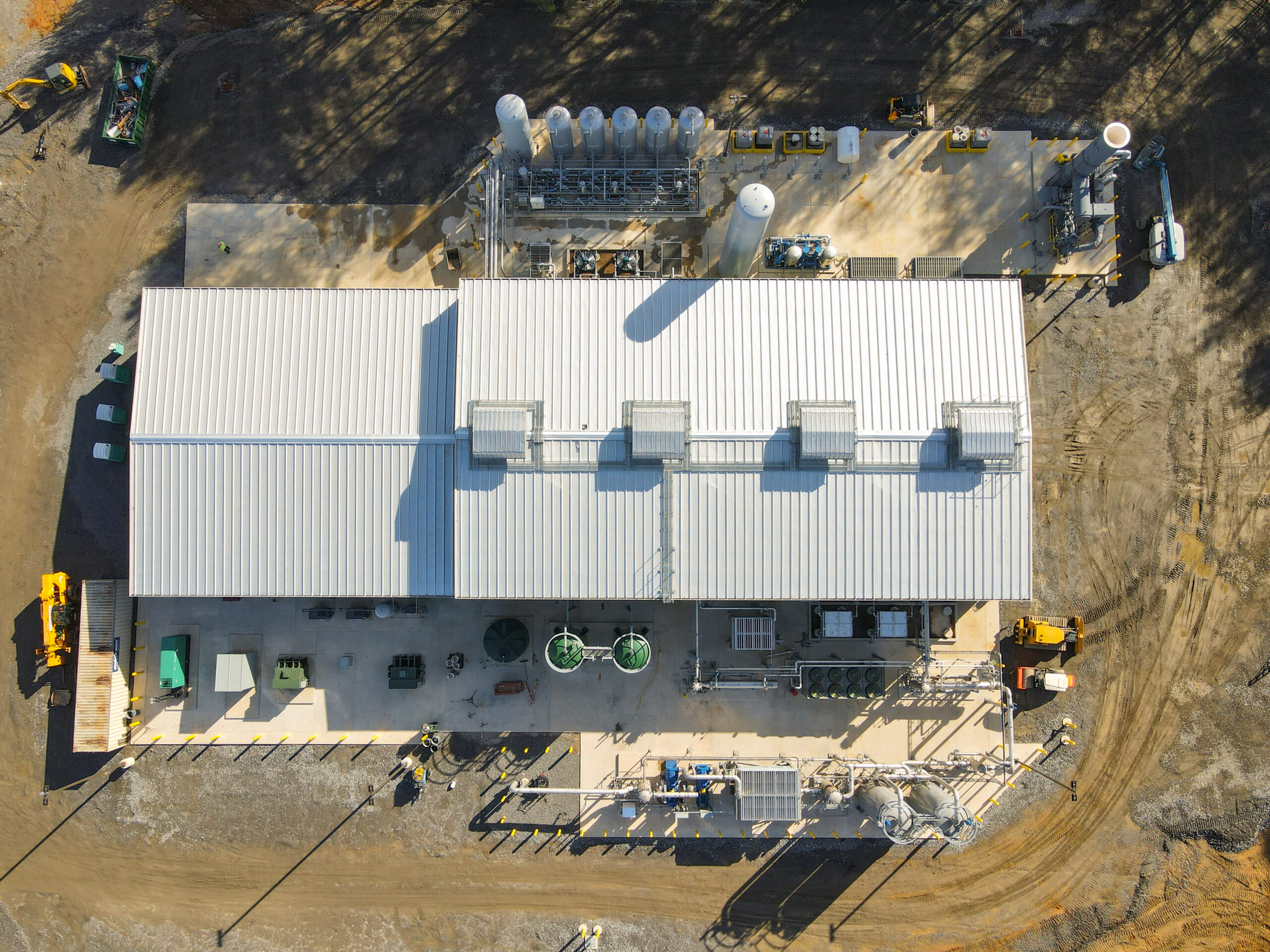
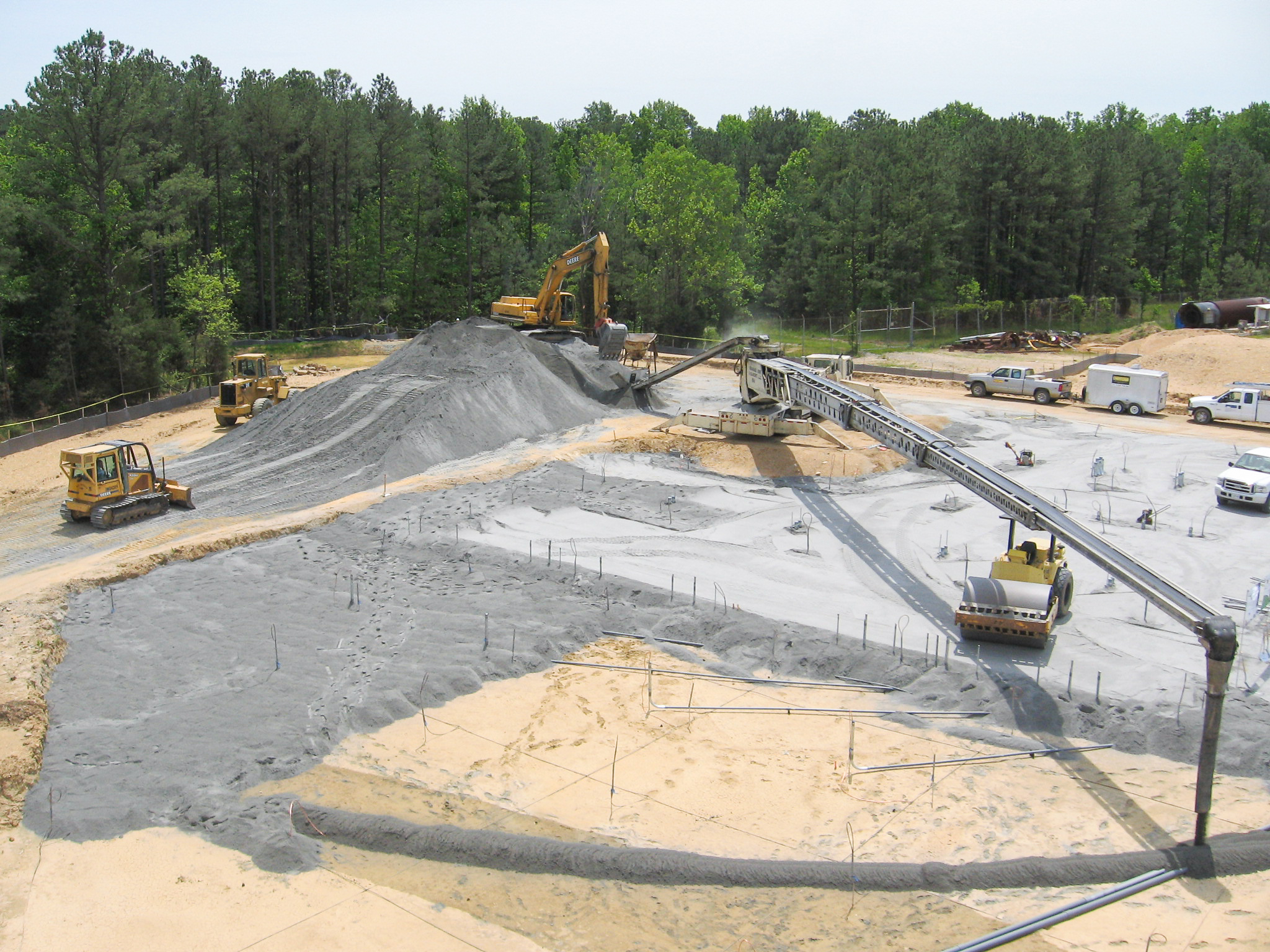
LFGTE construction begins with earthwork — clearing, grading, and preparing the site to accept foundations. Our crews work with heavy equipment to establish proper drainage, access roads, and level pad sites for the power plant structure. Many of our projects are located adjacent to active landfills, which adds complexity to site logistics and requires careful coordination with landfill operators.
Once the site is graded, work moves to foundations and underground infrastructure. This includes forming and pouring concrete engine pads, installing underground electrical conduit runs, and placing aggregate base material. The conduit networks for LFGTE plants are extensive — these facilities require heavy-gauge electrical runs connecting generators to switchgear rooms, step-up transformers, and the local utility grid.
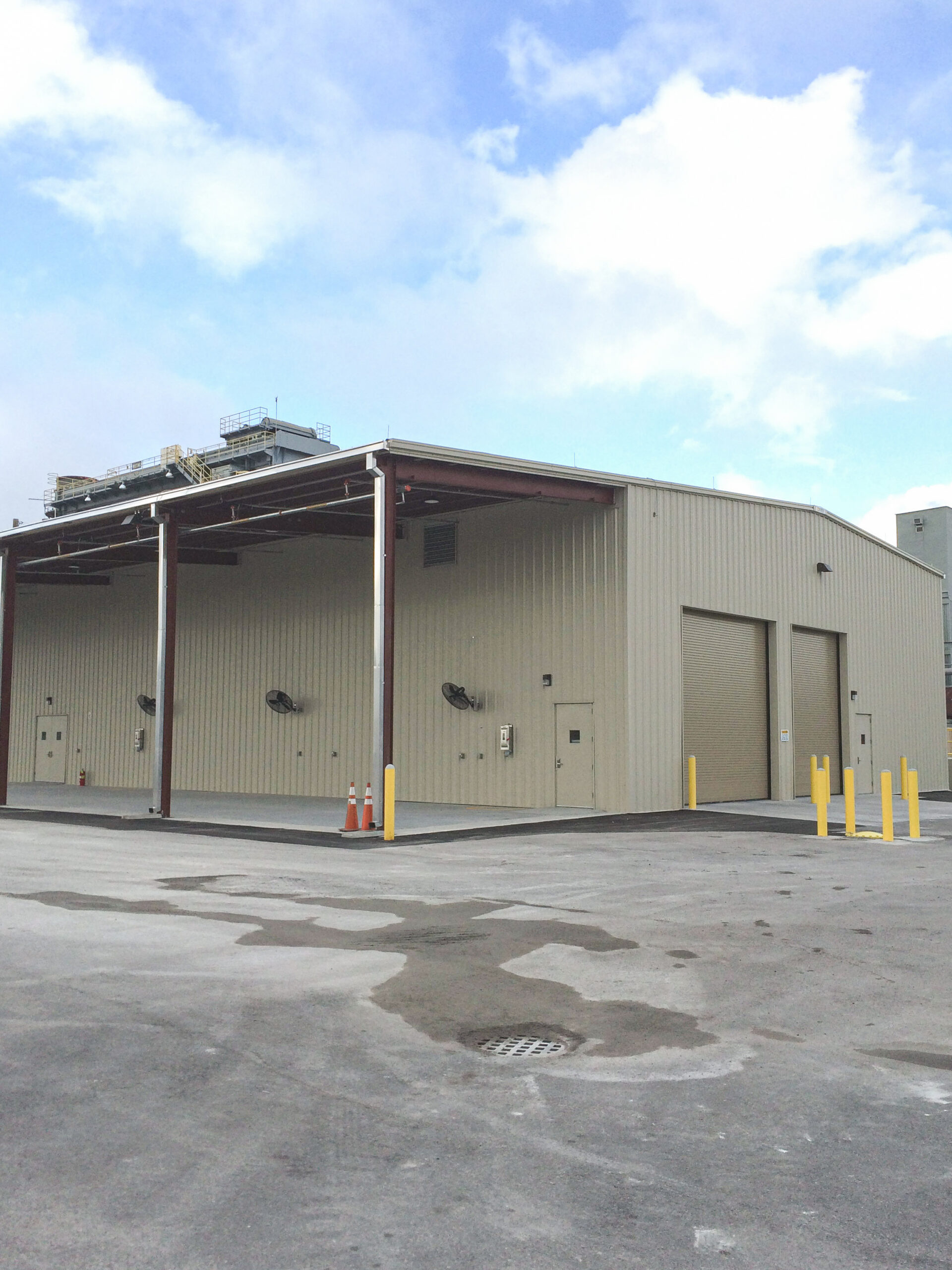
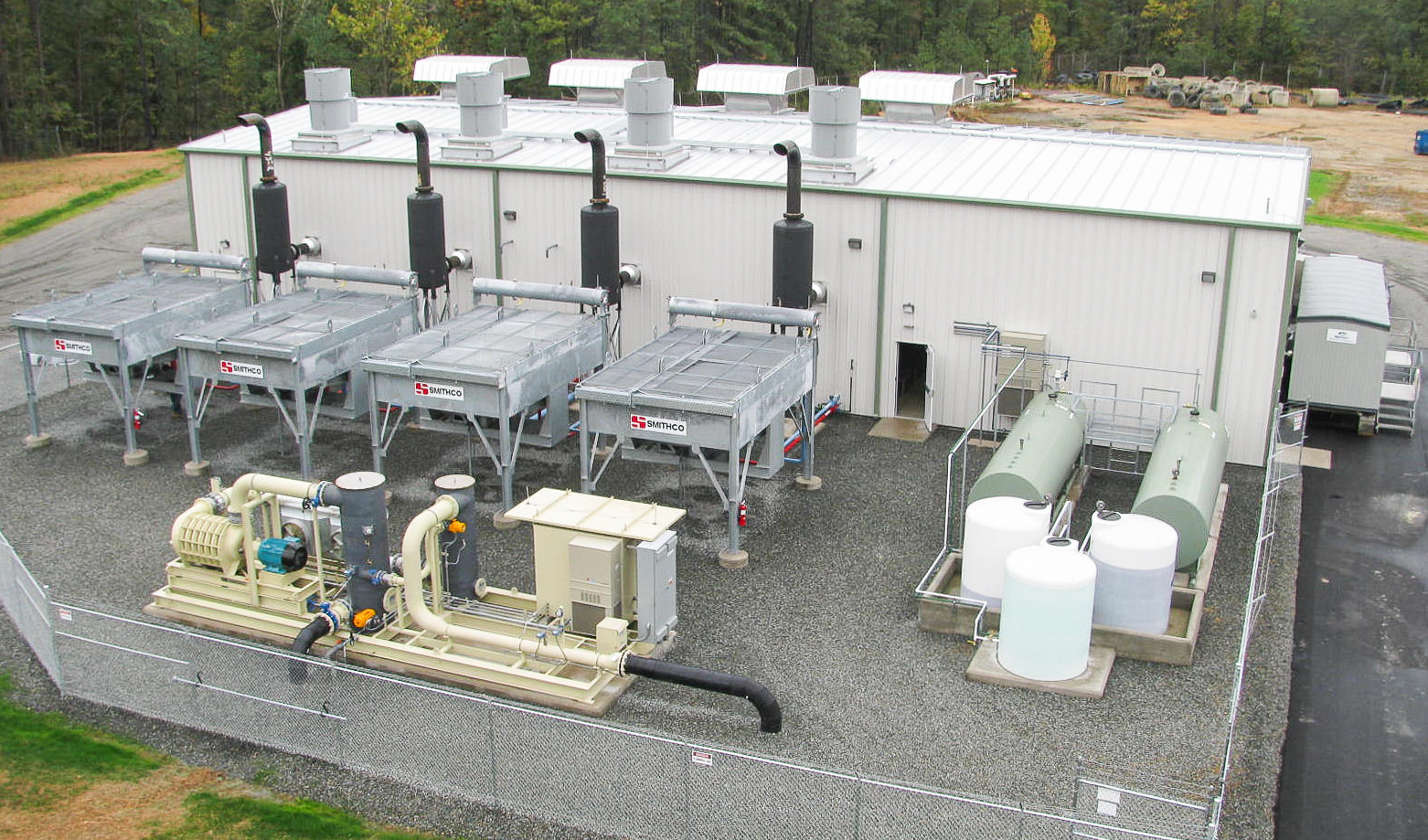
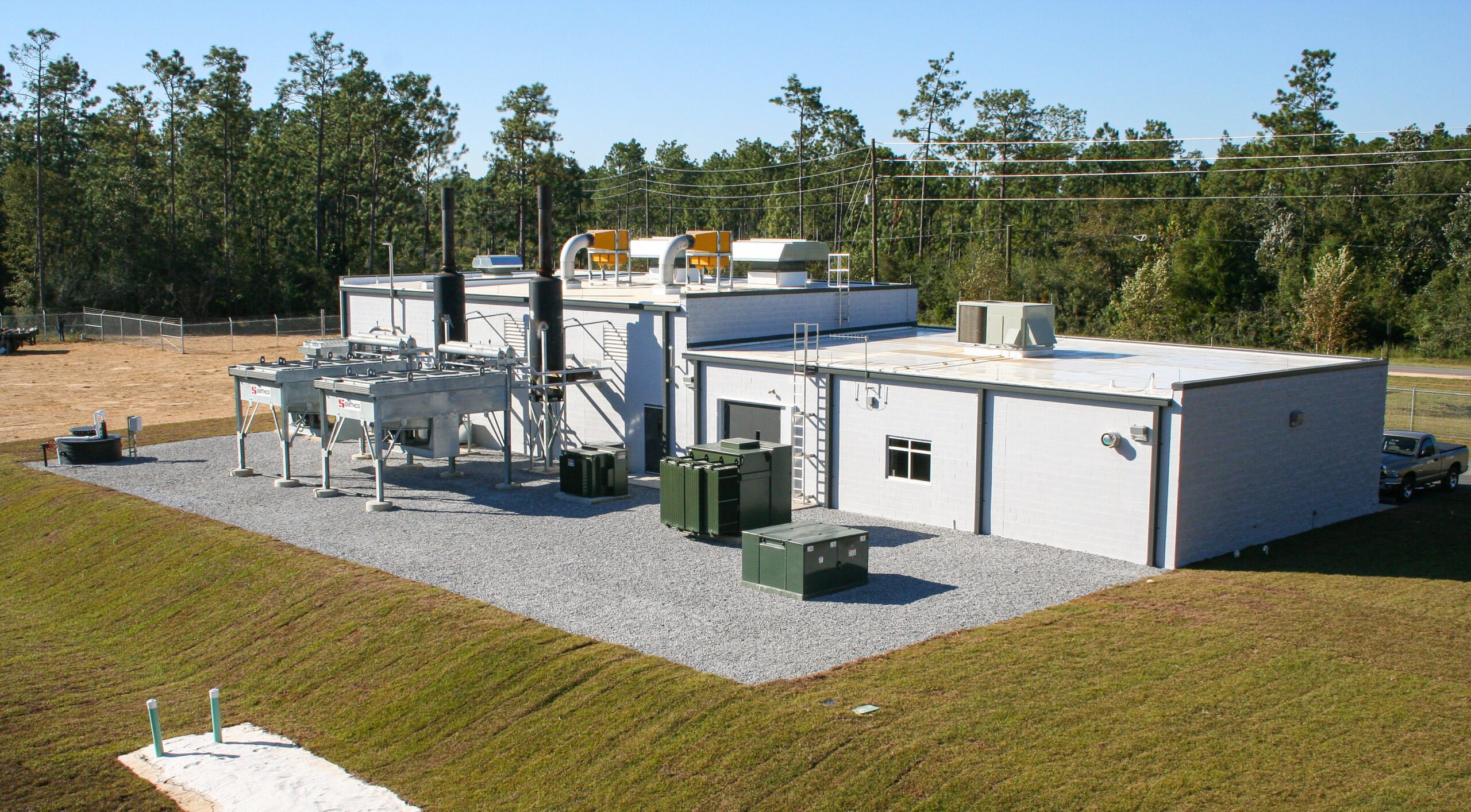
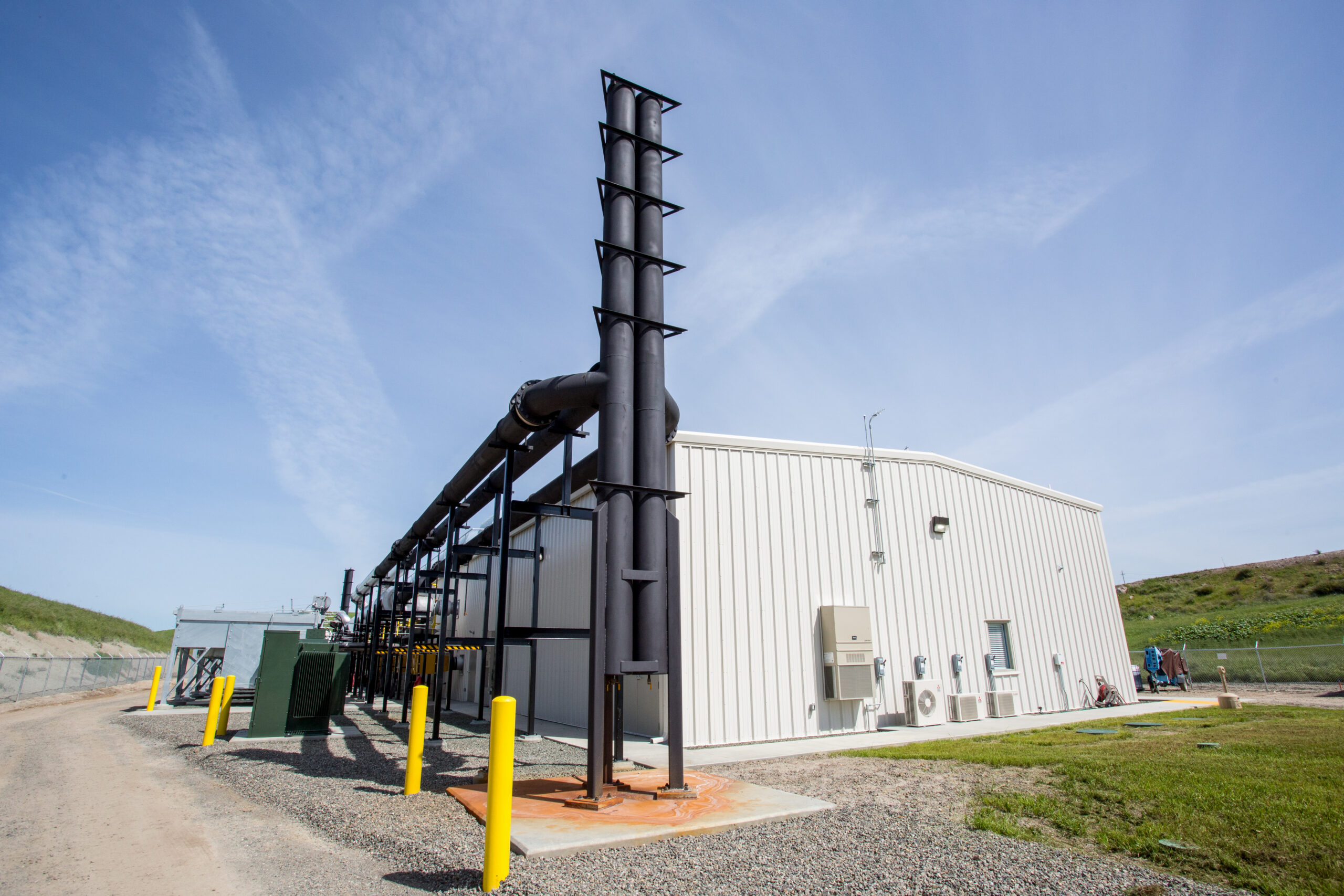
LFGTE power plants are typically housed in pre-engineered metal buildings designed to protect the generating equipment while allowing adequate ventilation, crane access, and maintenance clearance. Curington coordinates the steel erection, building envelope, and interior layout — including raised maintenance platforms, overhead crane rails, and equipment access bays.
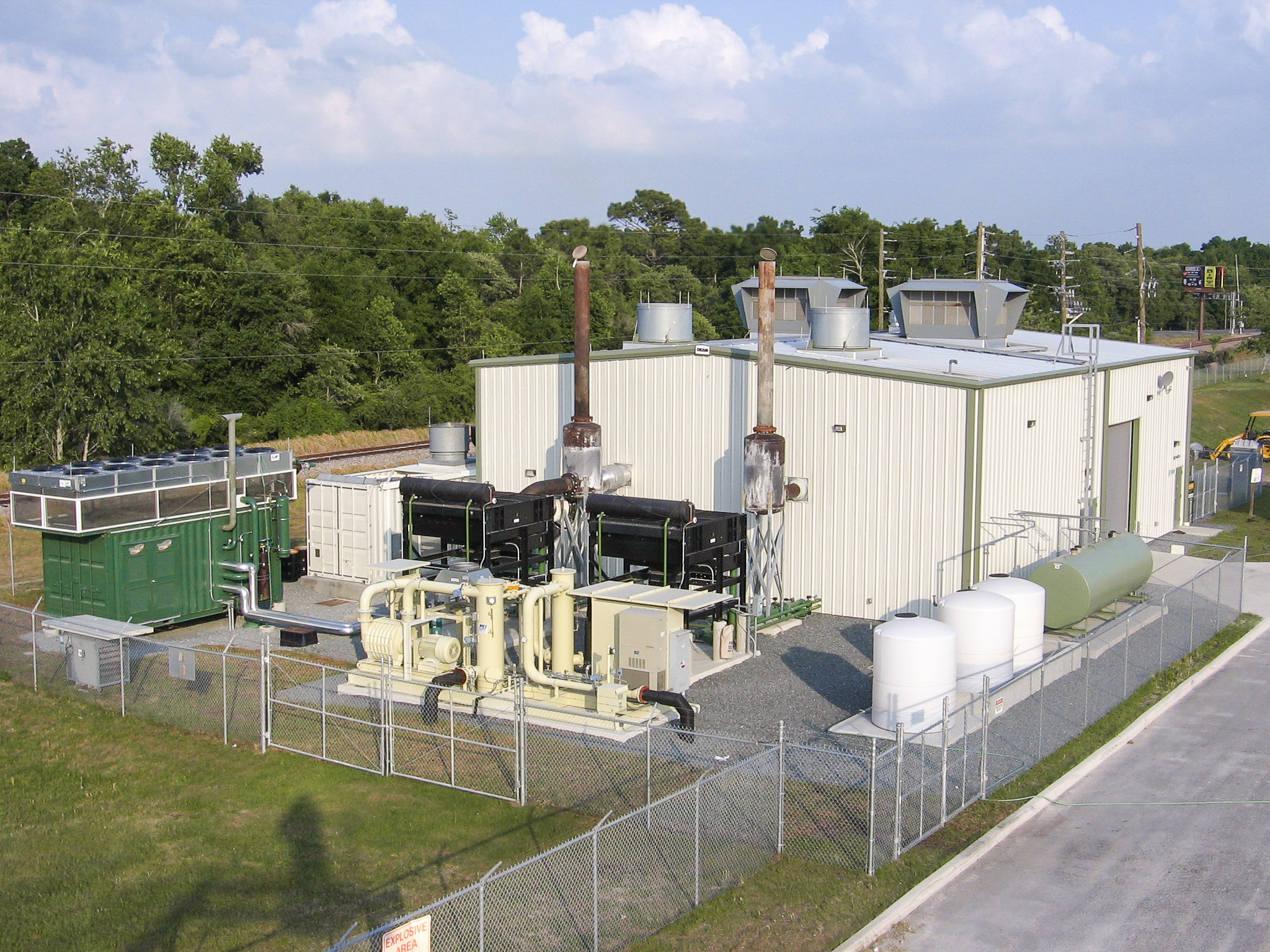
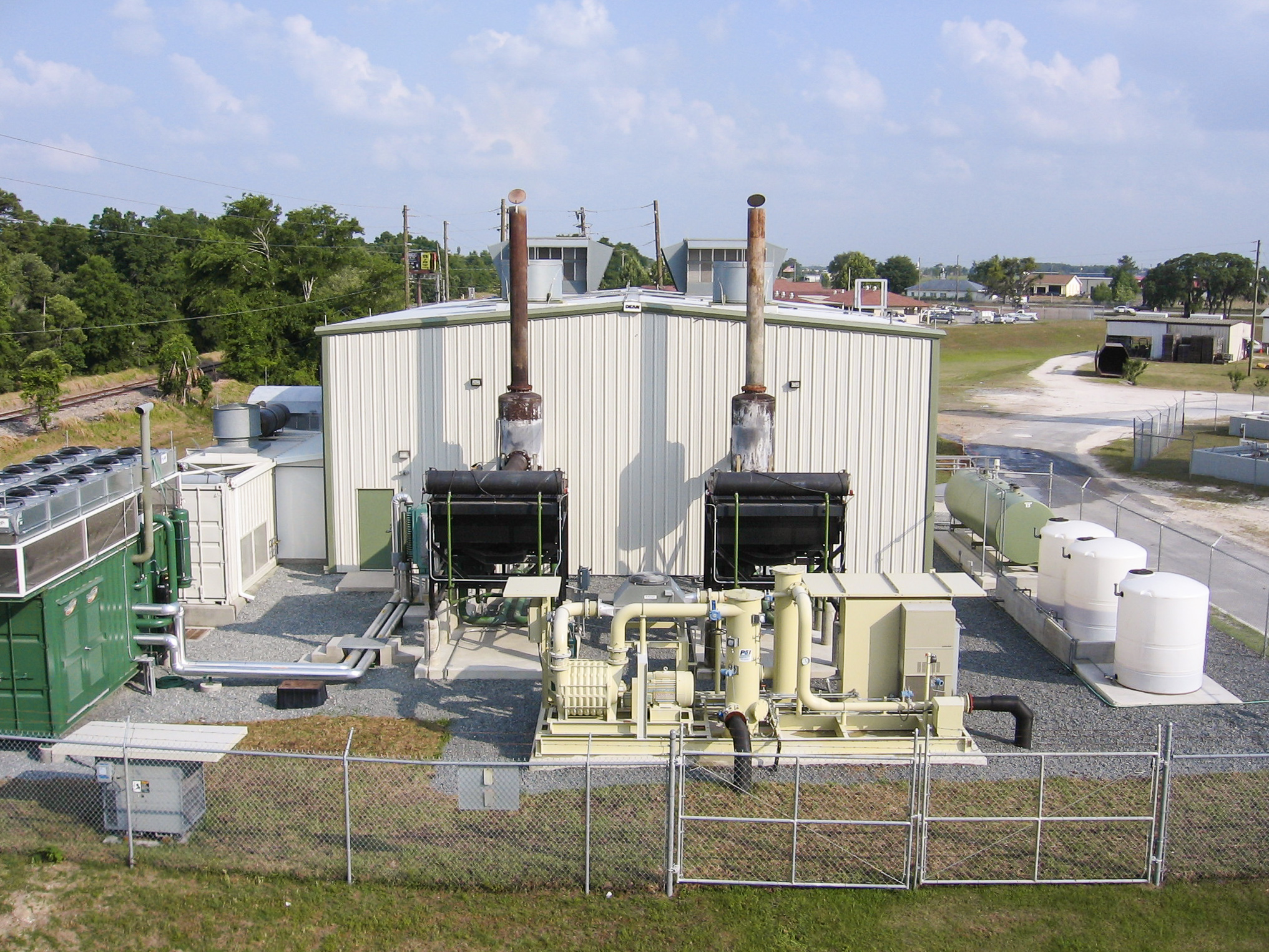
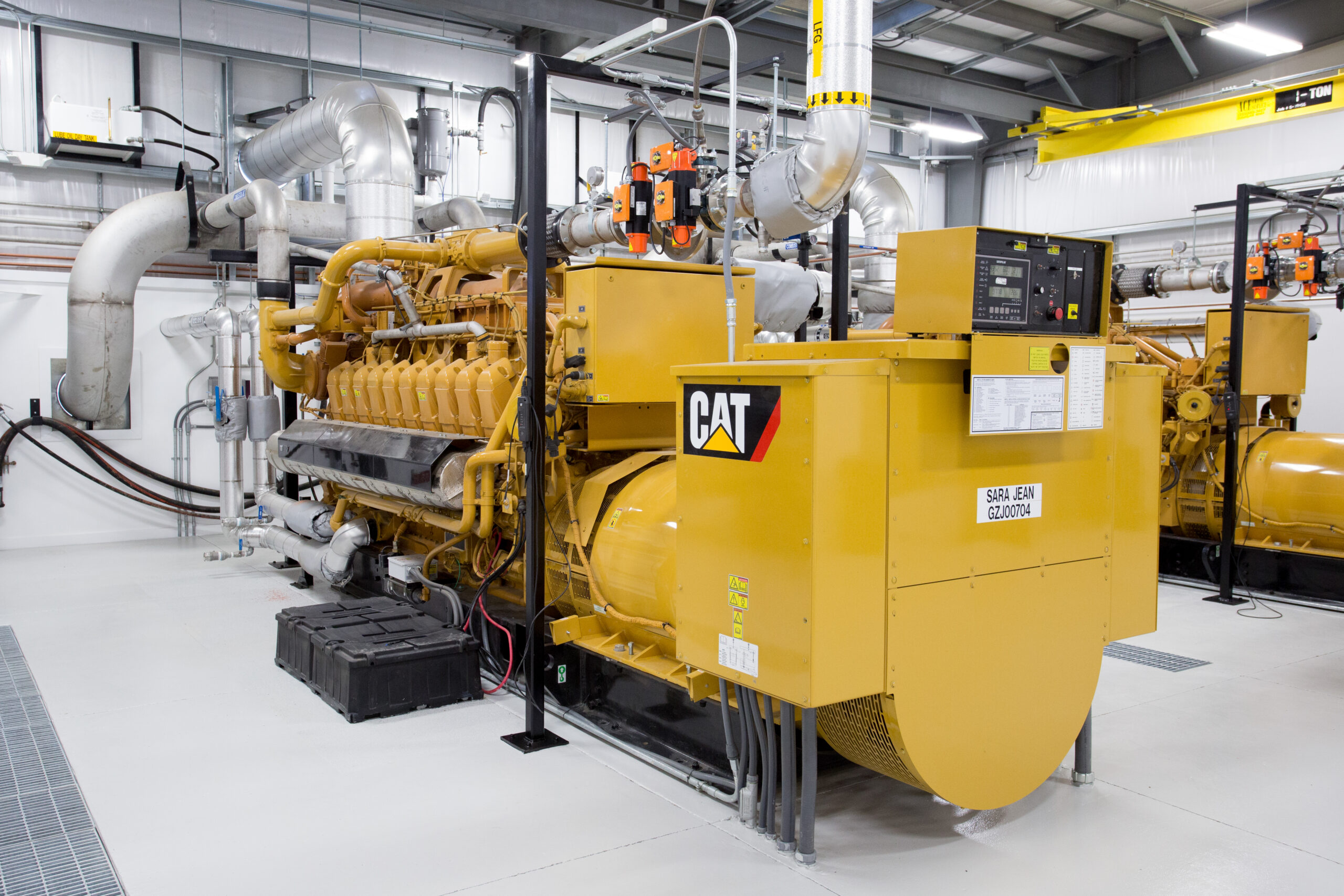
The core of every LFGTE facility is its generating equipment — typically Caterpillar G3520C reciprocating gensets fueled by processed landfill gas. Engine setting is one of the most critical phases of construction. Our crews coordinate crane lifts to place multi-ton engine-generator packages onto prepared foundations, then connect fuel gas piping, cooling systems, exhaust routing, and lube oil systems.
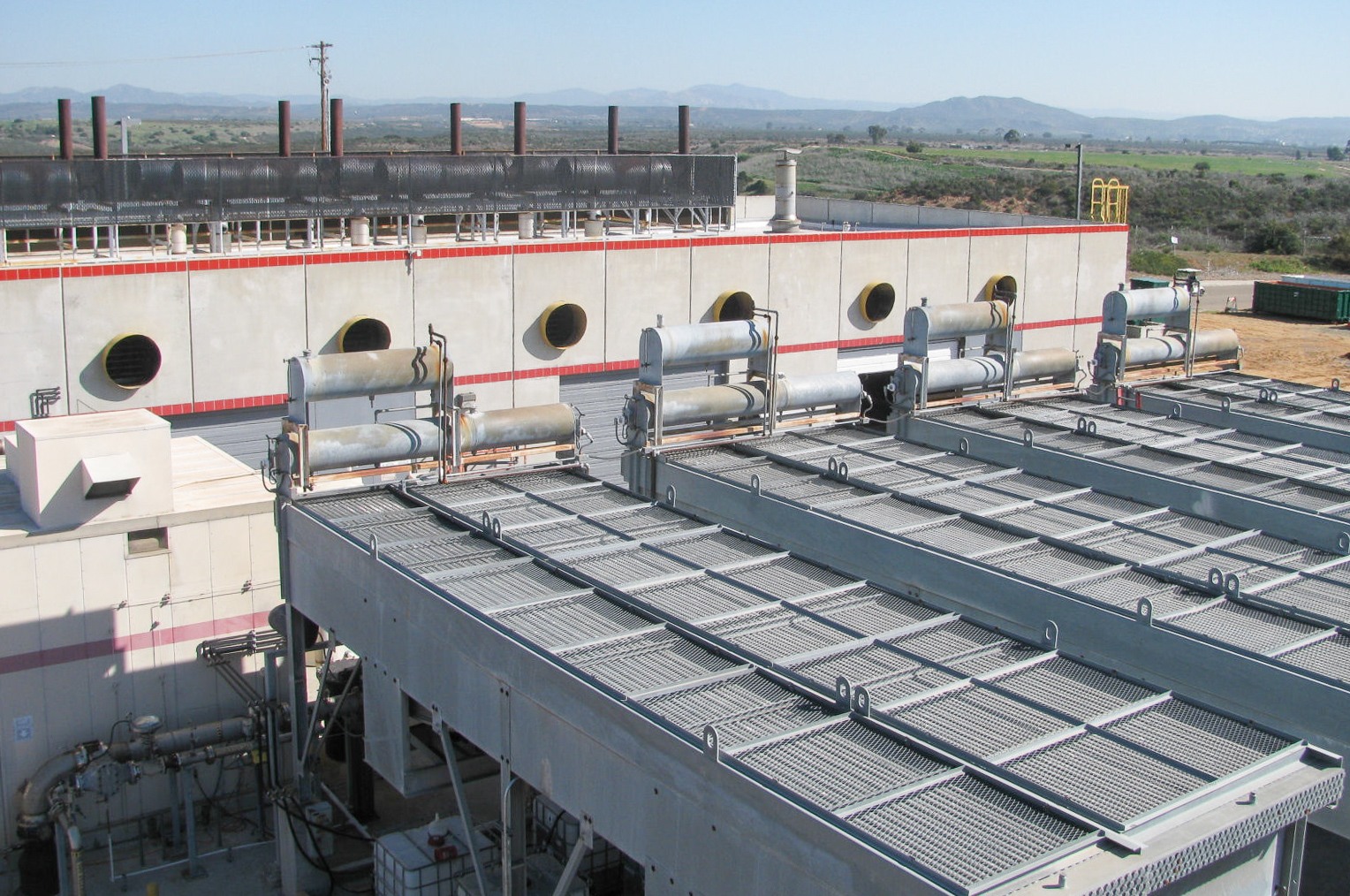
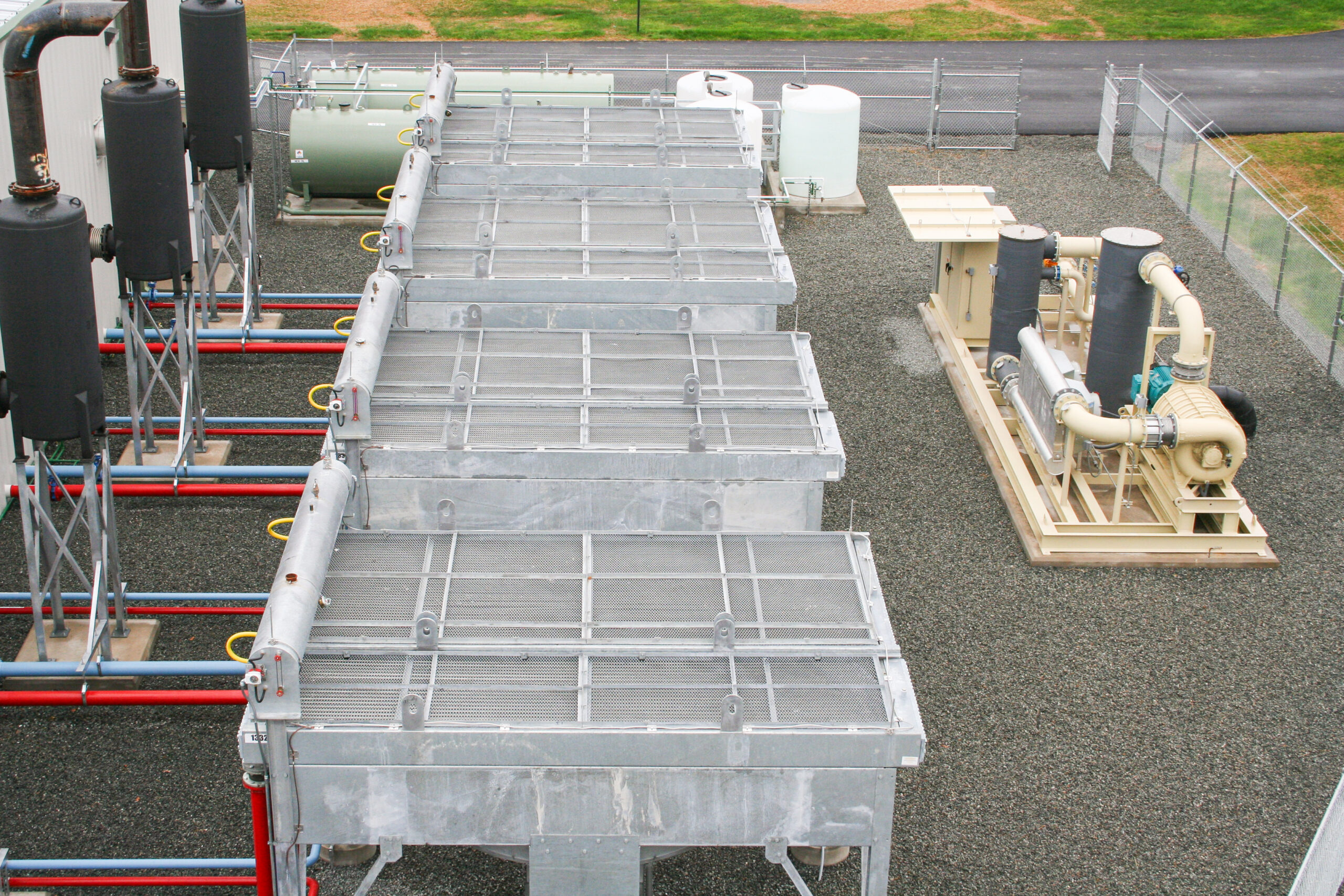
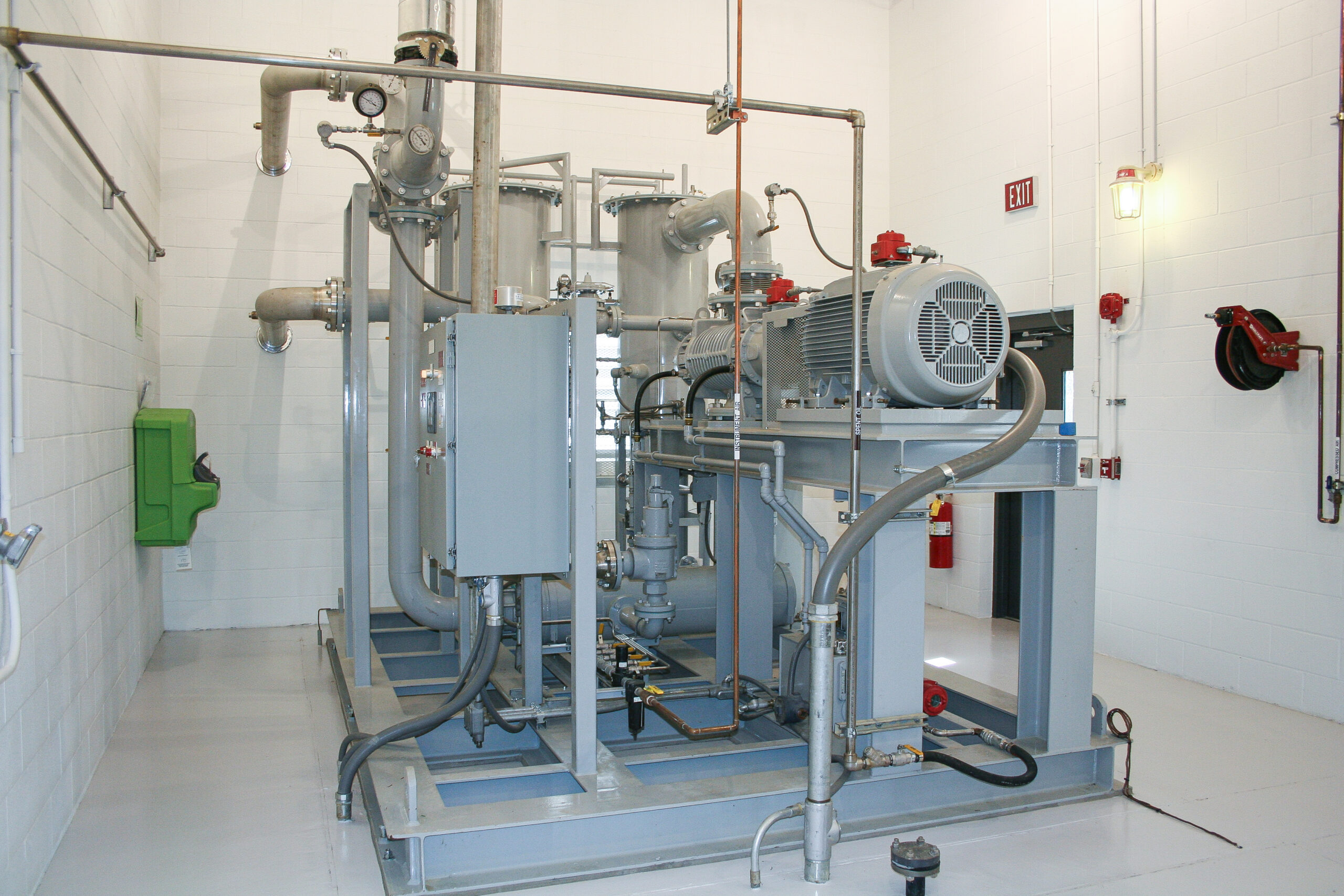
Before landfill gas reaches the engines, it must be processed. Gas compression equipment pressurizes the collected methane, while treatment systems remove moisture, siloxanes, sulfur compounds, and other contaminants that can damage generator components. Curington installs gas compression skids, cooling systems, chemical treatment systems, and flare stations that safely burn excess gas when generators are offline.
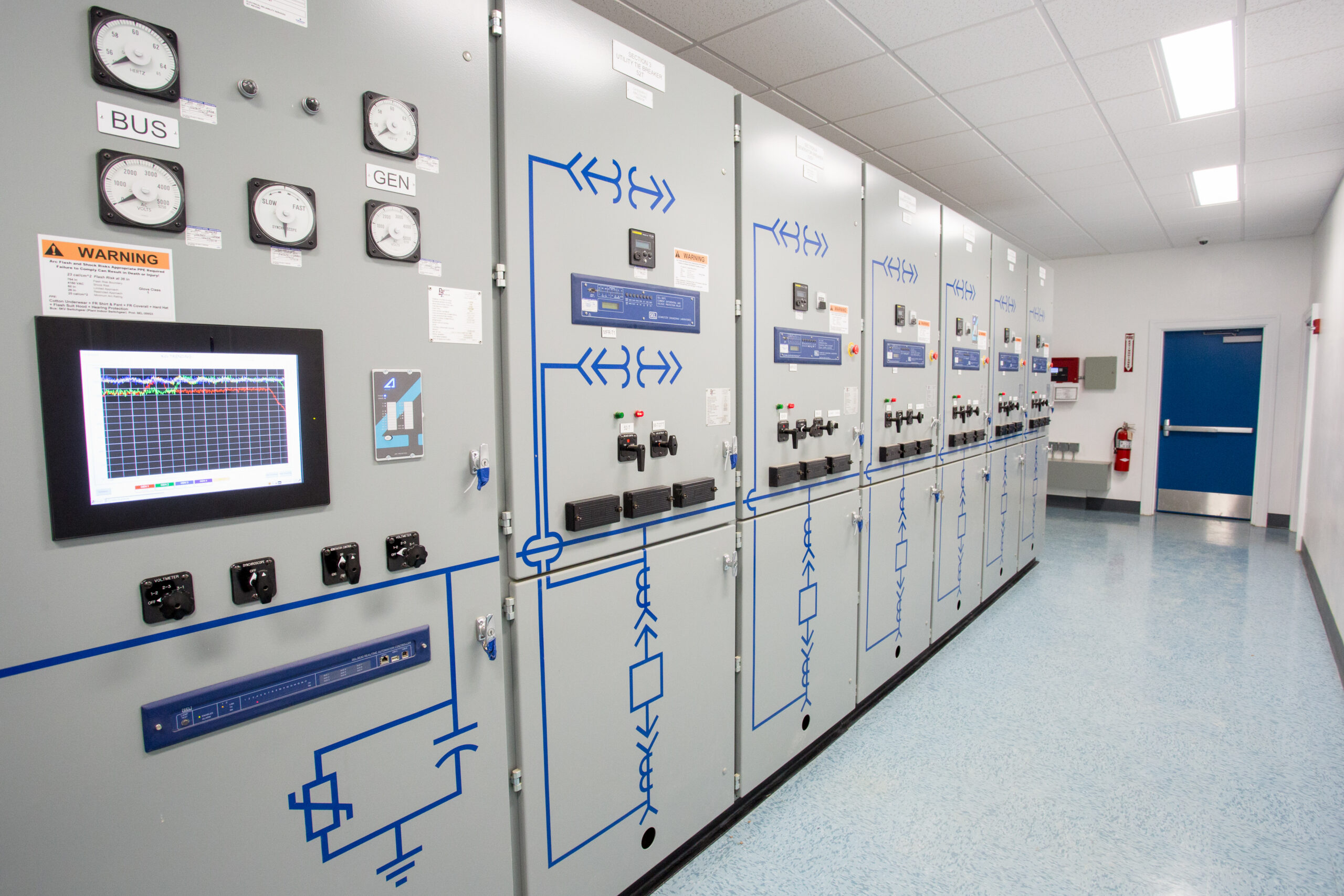
LFGTE facilities produce power that feeds directly into the local utility grid, which means the electrical infrastructure must meet strict utility interconnection requirements. Curington installs high-voltage switchgear, protective relaying, step-up transformers, and SCADA-based monitoring and control systems. Every electrical installation is coordinated with the local utility to meet their interconnection standards.
Once construction is complete, the facility moves through commissioning — a systematic process of testing every system before the plant goes online. Curington doesn’t just build these facilities; we also operate and maintain them. Our O&M division provides ongoing operations support, giving us a unique understanding of how design and construction decisions affect long-term facility performance.
We’re here to help you plan, design, and build energy infrastructure that performs. Contact our team to discuss your next LFGTE or RNG project.
Our portfolio of completed landfill gas-to-energy projects spans the eastern United States and beyond. Here are some of the facilities we’ve built.
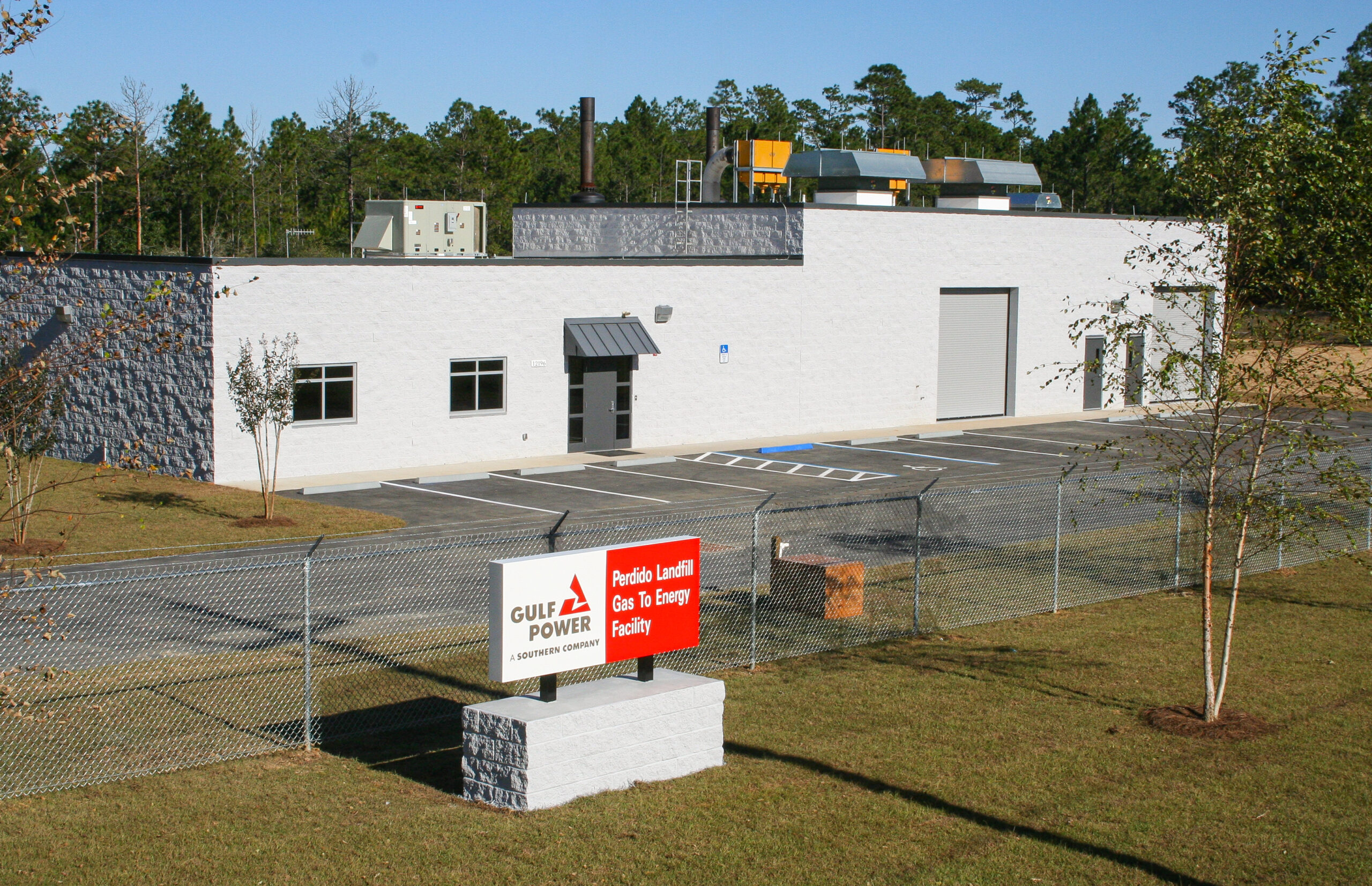
Gulf Power’s first renewable energy facility — and the first LFGTE plant built by Southern Company — was constructed by Curington at the Perdido Landfill. The 3.2-megawatt facility houses two Caterpillar G3520C reciprocating gensets and generates enough clean energy to power more than 900 homes.
| Capacity | 3.2 MW |
| Engines | 2x Caterpillar G3520C |
| Owner | Gulf Power (Southern Company) |
| Homes Powered | 900+ |
Curington’s first LFGTE project, located at the Marion County Landfill in Ocala, Florida. This 3.25-megawatt facility was a partnership with G2 Energy LLC and Energyneering Solutions Inc. The power plant features two Caterpillar G3520C gensets with raised maintenance platforms and a 2-ton overhead crane.
| Original Capacity | 3.25 MW |
| Expanded | 4.1 MW |
| Engines | 2x CAT G3520C + 1x CAT 3516 |
| Partners | G2 Energy, Energyneering Solutions |
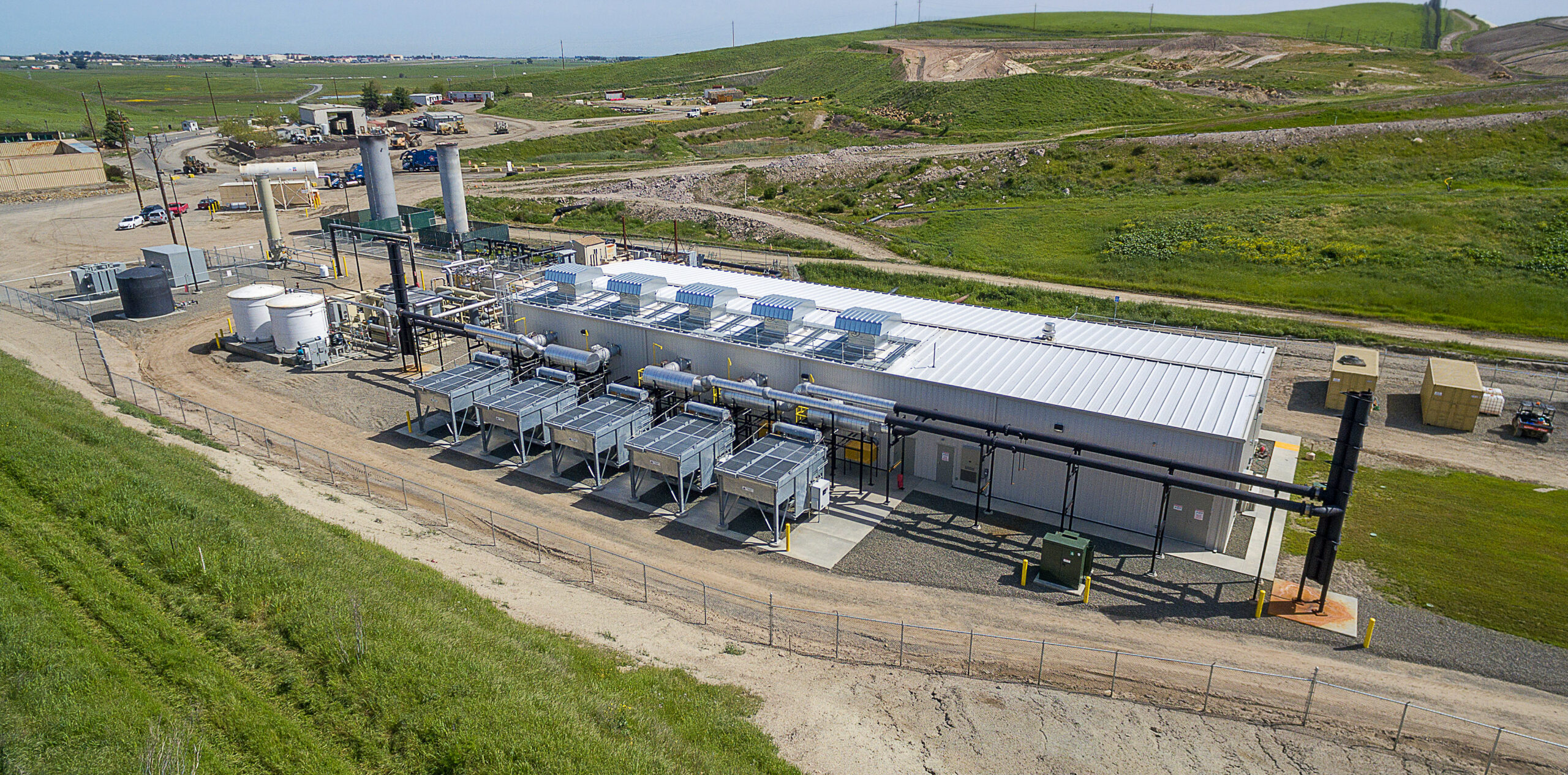
Curington’s largest LFGTE project to date — an 8.0-megawatt facility at the Potrero Hills Landfill in Solano County, California. Built for DTE Biomass Energy and Pacolet Milliken Enterprises, this five-engine power plant sells renewable electricity to Pacific Gas & Electric.
| Capacity | 8.0 MW |
| Engines | 5x Caterpillar 3520 |
| Utility | PG&E |
| Homes Powered | ~7,000 |
Curington has built LFGTE and related facilities across the country, including:
[Add featured facility photo here]
Curington Contracting brings something most general contractors can’t — direct operational experience running LFGTE power plants. Our O&M division operates facilities after construction, which means we understand how every design and construction decision affects long-term performance, maintenance access, and equipment reliability.
That operational insight shapes how we build. We know where to place access platforms so technicians can service engines efficiently. We understand the gas treatment tolerances that protect generator components. And we build control rooms and switchgear layouts that operators actually want to work in.
Combined with our integrated design-build process and in-house CADD capabilities, Curington delivers LFGTE facilities that are built to perform from day one — and designed to be maintained for decades.
LFGTE construction involves building facilities that capture methane gas produced by decomposing waste in landfills and convert it into electricity or renewable natural gas (RNG). These facilities include gas collection and processing systems, reciprocating engine generators, switchgear, utility interconnections, and supporting infrastructure. Curington Contracting builds complete LFGTE facilities from site preparation through commissioning.
Curington has built LFGTE facilities ranging from 850-kilowatt single-engine containerized installations to 8.0-megawatt multi-engine power plants. We work with project developers and energy companies to design and construct facilities sized to match each landfill’s gas production capacity.
While our headquarters is in Ocala, Florida, we build LFGTE facilities nationwide. Our completed projects span Florida, California, Virginia, Pennsylvania, Mississippi, and North Carolina. We’ve worked with major energy developers including Gulf Power (Southern Company), DTE Biomass Energy, Waste Management Renewable Energy, Fortistar Methane Group, and G2 Energy.
Both. In addition to construction, Curington has an Operations & Maintenance (O&M) division that operates LFGTE facilities after they’re built. This dual capability gives us a unique perspective — we build facilities with long-term operations in mind, because we know firsthand what works and what doesn’t once a plant is running 24/7.
Most LFGTE power plants use Caterpillar reciprocating gensets — specifically the G3520C model — which are designed to run on landfill gas fuel. These engines are reliable, well-supported, and widely used across the industry. Curington has experience setting and connecting single-engine installations through five-engine configurations.
Whether you’re planning a new landfill gas-to-energy facility, an RNG plant, or an expansion of an existing site, Curington has the experience to deliver. Let’s talk about your project.